
Audience
All audiences
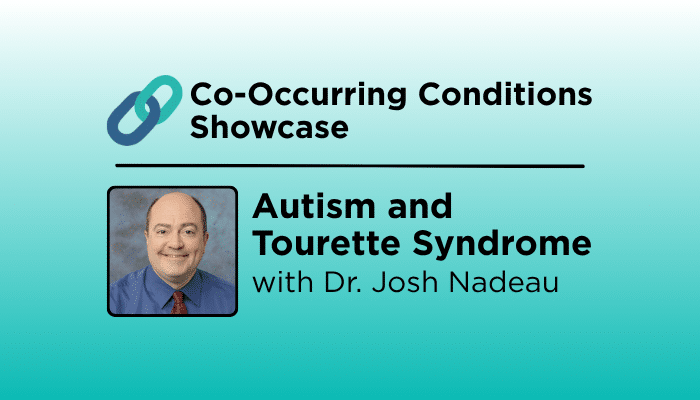
Co-Occurring Conditions Showcase: Autism and Tourette Syndrome
Tourette Syndrome (TS) and Autism are distinct neurodevelopmental conditions, but they share significant overlap across genetic, neurobiological, and behavioral domains. Recognizing these overlapping areas, while also understanding the important distinctions between conditions, helps us to coordinate more effective and efficient strategies for managing symptoms (and reducing impairment).
About the Co-Occurring Conditions Showcase
Key Takeaways
- TS and Autism feature overlapping phenomena. Repetitive behaviors (tics in TS, stereotypies in Autism), sensory and social-communicative challenges, and increased rates of other comorbidities (ADHD, OCD, ODD, etc.) are common shared features across both conditions.
- Despite areas of commonality, there are critical distinctions across TS and Autism with respect to diagnostic considerations. Tics are the defining diagnostic feature of TS but are not required for an Autism diagnosis; similarly, durable differences in social interaction, communication, and behavioral routines are the hallmark of autism, although not a core feature of TS.
- Managing the combination of Autism and TS relies upon carefully coordinating a variety of treatment approaches. These approaches often include behavioral therapies, precision medical monitoring, and environmental accommodations.

Josh Nadeau, Ph.D.
Dr. Josh Nadeau is a licensed psychologist, and a Clinical Associate Professor at the University of Florida. His research interests include the modification of evidence-based treatment approaches to meet the unique needs of neurodivergent individuals. Dr. Nadeau has developed and clinically directed treatment programs at the inpatient, residential, intensive, and outpatient levels of care, and he frequently provides consultation and training on a variety of clinical topics. Prior to becoming a psychologist, Dr. Nadeau served as a submariner in the US Navy. As a result, he enjoys sunshine and windows, and often thinks others take themselves entirely too seriously.
