
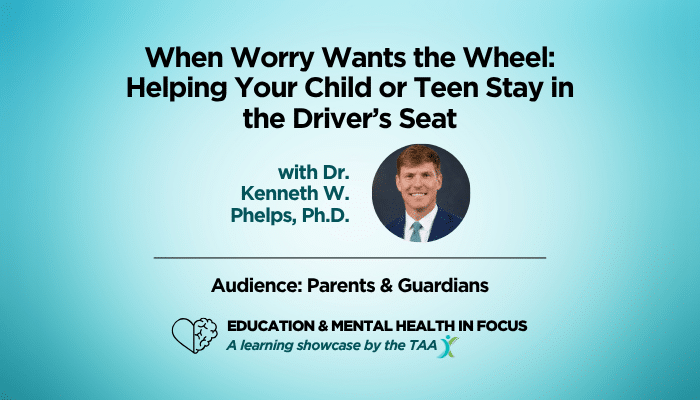
Audience
Parents & Guardians
About this Workshop
Anxiety is a common experience for many children and teens with tic disorders, particularly when navigating academic demands, social situations, and concerns about how others may respond to their motor or vocal tics. Rather than focusing on controlling anxiety, this session will explore practical ways families can help young people respond more effectively to worry, uncertainty, and uncomfortable emotions. Drawing from Acceptance and Commitment Therapy (ACT), participants will learn strategies for fostering psychological flexibility, supporting independence, and helping youth stay engaged in school, friendships, extracurricular activities, and other valued areas of life. The discussion will also address ways caregivers and educators can respond to anxiety in ways that build confidence and resilience without unintentionally reinforcing avoidance—even when anxiety is along for the ride.
Key Takeaways
- Understand how efforts to eliminate anxiety can sometimes increase its influence.
- Learn practical ACT strategies for responding to worry and emotional discomfort.
- Help children identify what mattes and take valuable action even when anxiety is present.
- Explore ways caregivers and educators can support children without reinforcing avoidance.
About the Education & Mental Health in Focus Series
Education & Mental Health in Focus is a multi-part learning showcase designed to support families, caregivers, students, and community members navigating the educational and emotional experiences connected to Tourette Syndrome and other Tic Disorders. This series brings together clinicians, advocates, educators, college students, and professionals to explore topics related to school accommodations, mental health support, transition planning, postsecondary education, and family wellbeing.
Through practical discussions and lived experiences, participants will gain tools, resources, and strategies to better support children, teens, and young adults across different stages of their educational journey. Sessions will focus on advocacy, emotional wellbeing, navigating systems of support, and building confidence for both caregivers and students.

Kenneth W. Phelps, Ph.D.
Kenneth W. Phelps, PhD, is a Professor of Clinical Neuropsychiatry and Adjunct Professor of Clinical Pediatrics within the Division of Neurology at the University of South Carolina School of Medicine. Dr. Phelps has been practicing in South Carolina since 2010. Before this academic appointment, Dr. Phelps completed a doctoral degree in Medical Family Therapy at East Carolina University and an internship at Dartmouth. Dr. Phelps teaches in the general and child/adolescent psychiatry residency programs at Prisma Health, overseeing the Cognitive Behavioral Therapy curriculum. He is active within the Tourette Association of America, regularly presenting at the Rising Leader Program and supervising for the Behavioral Therapy Institute (BTI) where learners from across the globe receive training in Comprehensive Behavioral Intervention for Tics (CBIT).
