
Audience
All audiences
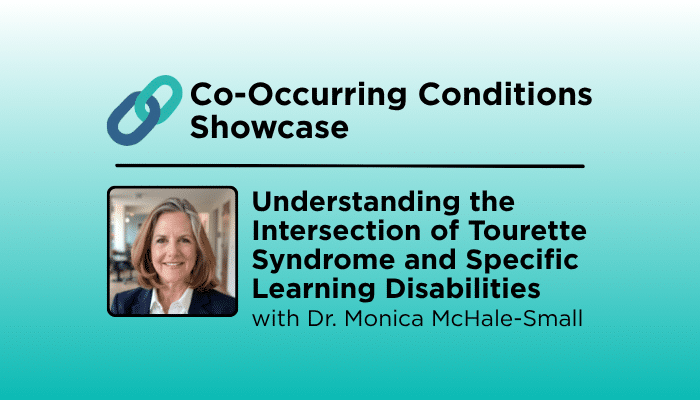
Understanding the Intersection of Tourette Syndrome and Specific Learning Disabilities: Implications for Instruction, Behavior, and Student Success
When Tourette Syndrome co-occurs with specific learning disabilities (SLD), including dyslexia, dysgraphia, and dyscalculia, the interaction of neurological, cognitive, academic, and social-emotional factors can create complex learning profiles that are frequently misunderstood by educators.
This webinar will explore the intersection of Tourette Syndrome and SLD, examining how co-occurring conditions may affect academic performance, attention, executive functioning, written expression, classroom participation, and emotional well-being. Attention will be given to distinguishing difficulties associated with tics, co-occurring ADHD or OCD, and specific learning disabilities.
The session will also address common misconceptions about Tourette Syndrome, the potential consequences of misinterpreting involuntary behaviors as intentional misconduct, and the importance of creating classrooms in which students feel understood, supported, and academically challenged. Practical, evidence-informed approaches to assessment, instruction, accommodations, and behavioral support will be presented. This webinar will provide actionable strategies for helping students with co-occurring Tourette Syndrome and SLD succeed academically, socially, and emotionally.
About the Co-Occurring Conditions Showcase
Key Takeaways
- Tourette Syndrome often co-occurs with other conditions, including ADHD, OCD, and specific learning disabilities (SLD). Educators must recognize how these conditions can interact while distinguishing the effects of tics from underlying difficulties in reading, writing, mathematics, and executive functioning.
- Accurate identification leads to more effective educational support. Comprehensive, interdisciplinary evaluation is essential to identifying students’ unique strengths and needs. Academic difficulties should not automatically be attributed to Tourette Syndrome, and the presence of Tourette Syndrome should not delay identification of an SLD or access to appropriate interventions.
- Effective instruction requires both academic intervention and a supportive classroom environment. Students with co-occurring Tourette Syndrome and SLD benefit from evidence-based academic instruction, individualized accommodations, and educators who understand the whole child and their specific diagnoses, strengths and needs.

Dr. Monica McHale-Small
Dr. Monica McHale-Small is the Interim CEO / Director of Education for the Learning Disabilities Association of America. Monica retired from public education after twenty-seven years of service in Pennsylvania. She began her career as a school psychologist but also served in a variety of school district administrative positions Superintendent. Concurrently, she prepared future educators and school psychologists as an adjunct professor at several Philadelphia area universities including Temple University, Monica earned her doctorate and master’s degrees from the University of Pennsylvania Graduate School of Education. She has served as President of the Learning Disabilities Association of America, the International Dyslexia Association, the Pennsylvania Branch of IDA, and the National Association of Pupil Services Administrators.
