
The TAA is the only national organization that invests in research for Tourette Syndrome (TS) and Tic Disorders at this level. This research has led to increased knowledge, cutting-edge treatments, and improved care.
This important research is carried out by leading Young Investigators in the field of TS, Tic Disorders, and related disabilities and we invite you to join us in supporting their efforts. When you invest in research, there is a clear and direct impact on the lives of individuals with TS.
In addition, we would like to expand our research efforts into the field of Humanities and Social Sciences. By doing so, it will allow us to meaningfully address key focus areas that inform more than just the medical aspects of the condition, such as exploring creativity and the arts, interpersonal relationships, and so much more.
Support Research
TAA Research Advancements
- There are five genes and genetic variations (eg. CNTNAP2, SLITRK, HDC, NRXN1 and CNTN6) that cause rare forms of Tourette Syndrome, increase the risk of developing TS, and link Tourette Syndrome with other conditions like Obsessive Compulsive Disorder (OCD).
- Comprehensive Behavioral Intervention for Tics (CBIT), a medication-free behavioral therapy, has become the first-line treatment option recommended by the American Academy of Neurology, and is actively disseminated both nationally and internationally.
- Deep Brain Stimulation (DBS), while still experimental, has identified a pathway toward FDA approval for the treatment of severe TS cases.
- MRI studies have discovered differences in gray and white matter within a Tourettic brain, compared to control subjects, which could lead to more personalized treatment plans.
- For every $1 of TAA grant funding, investigators have obtained approximately $10 in grant funding from the National Institutes of Health (NIH), leveraging TAA’s initial seed investments toward larger research impact.
2025-2026 Young Investigator Award Projects

Functional Connectivity of the Cerebellum in Pediatric Tourette Syndrome
Sarah Chang, Ph.D. - University of California, San Diego
The cerebellum is an important part of the brain that helps control movement and may play a bigger role in TS than we realize. This study will look for common differences in the cerebellum’s brain circuits in children with TS compared to children without TS. In addition, this study will map features of the cerebellum that are unique to each child with TS, since every child has their own pattern of tics and influences that affect them. The goal of this research is to better understand how TS works in the brain and how it develops in children.

Reducing Barriers to Treatment Through Alternative Intervention Formats
Chelsea Dale, Ph.D. - University of Miami
This study is designed to test a new, short telehealth program that provides education and support for caregivers of children with TS and other Tic Disorders. The goal is to see if the program is practical, useful, and well received by families. A team of specialists with expertise in tic treatment will work together on this pilot study. Because many families struggle to access behavioral treatment for tics, the study will also explore whether this program could serve as an effective first step to receiving care.

Wearable Sensors for Tourette Syndrome Management
Raghav Garg, Ph.D. - University of Pennsylvania
Currently, tics and the impact of TS are often tracked using subjective and potentially inaccurate methods. This study will evaluate wearable devices that can automatically and precisely track motor tics to improve TS care and help set personal goals for therapy. The small, lightweight sensors will measure activity linked to the brain and muscles in real time and use software to spot patterns in tic behavior. By combining smart technology with data analysis, this project aims to improve understanding of how TS works in the brain and the muscles to better test how well treatments like behavioral therapy are working.

The Role of Tourette Syndrome and Brain Signals During Goal-Directed Behaviors
Elizabeth Holly, Ph.D. - Rutgers University, Newark
Many people with TS experience difficulties with decision-making and sensory processing. This can include making good choices when weighing pros and cons, as well as in sensory-seeking behaviors. This project studies how brain circuits that connect sensory areas and decision-making areas might play a role in these symptoms. Using mice with a known TS-linked gene, researchers will measure how this pathway works while the mice make reward-based choices and look for sensory stimulation. By learning more about how this circuit functions in individuals with TS, researchers can help develop new treatments.
Highlighting Past Projects
2024-2025

Miriam Bocarsly, Ph.D.
Assistant Professor, Rutgers University, New Jersey Medical School
The neurobiology underlying Tourette Syndrome has been understudied, in part, because the lack of appropriate animal models. In the current proposal, we utilize cutting edge mouse models expressing human mutations in Celsr3, a gene highly associated with Tourette Syndrome. Using these powerful genetic mouse models, we are finally able to examine and determine the neural circuitry affected in Tourette Syndrome, with the ultimate goal of identifying new targets in the brain for pharmaceutical treatment.
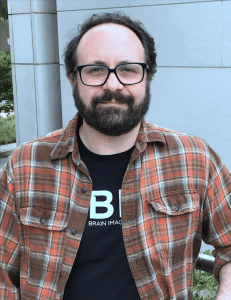
Damion Demeter, Ph.D.
Postdoctoral Scholar, University of California - San Diego
Every individual with Tourette Syndrome is unique with varying symptoms. Given these individual differences, the brain function underlying tics in TS is likely highly individualized. This study aims to identify individual differences in how functional brain networks coordinate and work together in TS. Using an approach to measure brain function at the individual level, by collecting hours of functional MRI data from each person, we will investigate how brain networks change between non-tic-related, pre-tic (premonitory urge), and post-tic (resolution) states. Understanding brain function underlying tics in individuals has the potential to inform personalized care and treatment in TS.

Emily Olfson, MD, Ph.D.
Assistant Professor, Child Study Center, Yale School of Medicine
Research has long demonstrated the important role of genetic factors in the development of chronic tic disorders, including Tourette Syndrome, but how different genetic factors combine to impact an individual’s risk remains incompletely understood. This project will employ complementary genomic methods to examine the combinatorial effect of different categories of genetic changes on risk for tics and related conditions in a cohort of families where a child is diagnosed with TS or another chronic tic disorder. This research aims to advance our fundamental understanding of how different genetic factors impact risk of tic disorders.

Emily Wilton, Ph.D.
Postdoctoral Associate, University of Minnesota
Tic reduction is the primary outcome used to measure the effectiveness of Tourette Syndrome treatments. This practice assumes that decreasing tics is the primary treatment goal for all patients; however, prior research has highlighted several reasons that patients seek treatment outside of tic reduction. This study will interview patients and families seeking treatment for TS and those who have previously received TS treatment to learn more about reasons for seeking treatment and treatment goals. Information collected from interviews will be used to develop the first TS patient-centered outcome measure co-created by patients and researchers.
2023-2024
EXPLORING THE CONNECTION BETWEEN EARLY CHILDHOOD STRESS, MALES, AND TS
Cheng Jiang, PhD, Yale University
Deepening our understanding of how environmental and sexual differences are related to TS, paving the way for the development of sex-specific intervention and prevention strategies.
USING MEDICAL RECORDS TO UNDERSTAND THE ROLE OF GENETICS IN TIC DISORDERS
Tyne Miller-Fleming, PhD, Vanderbilt University
Improving the scientific understanding of how genetics contributes to Tourette Syndrome by calculating a person’s risk of Tic Disorders via electronic medical records to identify patterns of medical conditions that commonly occur with a Tic Disorder diagnosis.
UNDERSTANDING HOW STIGMA AFFECTS MENTAL HEALTH IN ADULTS WITH TS
Chengshi Shiu, PhD, University of California Los Angeles
Gaining a better understanding of how stigma affects the mental health of adults with Tourette Syndrome with a long-term goal to find ways to support adults with TS in managing the challenges of stigma and promoting their mental health.
UIMPROVING TIC MANAGEMENT WITH COMPREHENSIVE BEHAVIORAL INTERVENTION FOR TICS
Brianna Wellen, PhD, University of Minnesota
Examining fine-grained changes in tic controllability throughout CBIT by collecting information about tics before, during, and after treatment for 80 participants, and mapping how changes in tic controllability are associated with treatment success.
2022-2023
DEVELOPING GAME PLAY TO ENHANCE BEHAVIOR THERAPY
Gal Raz, PhD, Tel-Aviv University and Tel-Aviv Sourasky Medical Center
Developing and validating a neuroscientifically-informed gamified tic therapy platform to enhance exposure and response prevention (ERP) behavioral treatment in Tic Disorders by increasing the efficiency and compliance with the treatment.
INVESTIGATING NEURON ACTIVITY DYSFUNCTION
Max Tischfield, PhD, Rutgers University
Investigating changes to neuronal activity and behavior using mouse models for Tourette Syndrome engineered to express human de novo mutations in Celsr3.
The result of this study revealed that different Tourette-associated mutations can tune brain circuits in distinct ways, helping explain why symptoms vary among individuals and underscoring the value of developing precise genetic models that carry the same gene mutations found in people. This work—supported by a Tourette Association of America Young Investigator Award—advances the path toward more targeted therapies.
Read this project’s publication.
EXPLORING BRAIN COMMUNICATION AS A MECHANISM OF COMPULSION
Alik Widge, MD, PhD, University of Minnesota
Studying how brain areas communicate to produce more flexible or more rigid, compulsive behavior, to understand both the tics and the obsessive-compulsive symptoms of TS.
EXAMINING BRAIN ACTIVITY TO DEVELOP BIOMARKERS
Davis Alan Isaacs, MD, PhD, Vanderbilt University Medical Center
Identifying markers of brain activity associated with premonitory urge and sensory processing dysfunction in Tourette Syndrome. This work aims to deepen insight into mechanisms of Tourette Syndrome sensory symptoms and to facilitate development of clinically meaningful biomarkers.
2021-2022
STUDYING LEARNING PROCESSES TO OPTIMIZE TREATMENT OUTCOMES
Joey Ka-Yee Essoe, PhD, Johns Hopkins School of Medicine
Studying the relationship between therapeutic learning processes and behavior treatment outcomes in youth with Tourette Syndrome with the goal of updating and optimizing interventions like Comprehensive Behavioral Intervention for Tics (CBIT).
