
Our Scientific Advisory Board (SAB) guides the Tourette Association of America in defining the strategic direction for our grant funding, promotes our funding calls among the scientific and medical community, reviews proposals, and ultimately makes recommendations for grant funding to the TAA’s Board of Directors.

John Piacentini, Ph.D.,
SAB Co-Chair,
University of California, Los Angeles
Los Angeles, CA
Dr. John Piacentini is Professor of Psychiatry and Biobehavioral Sciences and Chief of Child Psychology (in Psychiatry) in the David Geffen School of Medicine at UCLA and UCLA Semel Institute where he directs the Center for Child Anxiety, Resilience, Education and Support (CARES), and the Child OCD, Anxiety and Tic Disorders Program, a TAA Center of Excellence. Dr. Piacentini received his Ph.D. in Clinical Psychology from the University of Georgia and completed post-doctoral training and was a faculty member at NY State Psychiatric Institute/Columbia University. A board-certified clinical child and adolescent psychologist, his work focuses on the development and dissemination of science-based individual- and family-based treatments for youth with tic, OCD, anxiety, and body-focused repetitive behavior disorders. He has authored over 300 scientific publications, including seven books, and his research has been funded by the National Institute of Mental Health, PCORI, IOCDF, TAA, TLC and other leading foundations and philanthropic organizations. Dr. Piacentini is also SAB Chair for the TLC Foundation for BFRBs, and past-president of the American Board of Professional Psychology (ABPP) and the Society for Clinical Child and Adolescent Psychology, and a founding fellow of the Academy of Cognitive Therapy. He is a frequent lecturer and actively involved in training mental health practitioners how to treat youngsters with anxiety and similar problems.

Marc F. Schmidt, Ph.D.
SAB Co-Chair
University of Pennsylvania
Philadelphia, PA
Dr. Marc Schmidt is currently Professor of Biology at the University of Pennsylvania where he studies the neural circuits involved in acoustic communication using songbirds as a model system. His work has focused on the motor control of song production and the role of behavioral state on sensory processing. Because the specialized circuits involved in vocal communication rely on the same basal ganglia circuitry that is affected in TS, this work allows the study of sensorimotor integration and processing within a natural behavior. Dr. Schmidt is also director of the Biological Basis of Behavior program at the University of Pennsylvania.
Having an adult daughter with TS, Dr. Schmidt has been heavily involved in TS outreach. He founded Waffles for Tourette, which raises awareness of TS at local Farmers Markets, and runs a workshop twice a year in collaboration with the Integrative Health Program at the Children’s Hospital of Philadelphia. This workshop was funded by a TAA/CDC seed grant and consists of a one-day workshop for parents and teens blending education and advocacy with mindfulness and theater improvisation techniques to address TS.
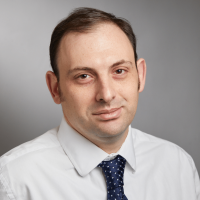
Michael H. Bloch, M.D., M.S.
Yale Child Study Center
New Haven, CT
Michael H. Bloch, M.D., M.S. graduated from Yale School of Medicine and completed his child and adult psychiatry training at Yale. He is currently an Associate Professor at the Yale Child Study Center. His research focuses on evidence-based medicine and developing improved treatments for individuals with mental illness across the lifespan using clinical trials and meta-analysis. His clinical and research interests concentrate on depression, anxiety, Tourette syndrome, ADHD, trichotillomania and OCD across the lifespan. He has published over 125 peer-reviewed manuscripts and was co-editor of the fifth edition of the Lewis Textbook of Child and Adolescent Psychiatry. He serves on the editorial boards of the Journal of the American Academy of Child Psychiatry, Journal of Child Psychology and Psychiatry, Journal of Child and Adolescent Psychopharmacology and Depression and Anxiety. Dr. Bloch treats and evaluates children with anxiety, depression, TS, OCD, ADHD and TTM as part of the Yale Child Study Center TS/OCD clinic and Yale Child Study Center Program for Anxiety Disorders.
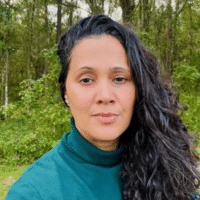
Franchesca Arias, Ph.D.
University of Florida
Gainesville, FL
Read Bio
Franchesca Arias, PhD is an Assistant Professor in the Department of Clinical and Health Psychology at the University of Florida, where she maintains an active and integrated portfolio of research, clinical practice, and academic mentorship. Her scholarly pursuits are anchored in three interrelated domains: 1. Identifying contextual and structural factors that confer protection against cognitive decline in socially and linguistically diverse populations; 2. Evaluating cognitive functioning in individuals at elevated risk for long-term impairment; and 3. Integrating technology to streamline clinical workflows and enhance research on cognition in vulnerable populations.
In the context of movement disorders, Dr. Arias plays an active clinical and research role as part of the multidisciplinary team at the Fixel Institute for Neurological Disorders. She routinely conducts neuropsychological evaluations to assess cognitive contraindications for deep brain stimulation (DBS) in linguistically and socially diverse patients diagnosed with Parkinson’s disease (PD), essential tremor (ET), or Tourette syndrome. In addition to her clinical responsibilities, she serves as a co-investigator on several funded studies, including The Human Thalamocortical Network in Tourette Syndrome and other research initiatives focused on PD and DBS stimulation. Her emerging research in this area includes investigations such as understanding cognitive profiles in linguistically diverse patients undergoing planned DBS as well as characterizing the cognitive and psychological outcomes following DBS in Tourette Syndrome, which aim to illuminate the intersection of neurological, psychological, and sociocultural factors in DBS outcomes.
Originally from Santo Domingo, Dominican Republic, Dr. Arias completed her BA in Psychology from Binghamton University (2002), an MS in Neuroscience in Education from Teachers College, Columbia University (2008), and a PhD in Clinical Psychology from Fordham University (2017). She completed an APA-accredited internship and a two-year postdoctoral fellowship in Neuropsychology at the University of Florida (2021).
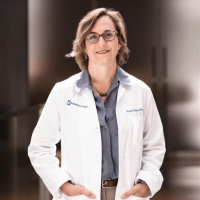
Nicole Calakos, M.D., Ph.D.
Duke University Medical Center
Durham, NC
Read Bio
Nicole Calakos, M.D., Ph.D. is the Lincoln Financial Group
Distinguished Professor of Neurology and Neurobiology and Chief of the
Movement Disorders section in Neurology at Duke University Medical
Center. Dr. Calakos received her bachelor’s degree from the University
of California, Berkeley, M.D. and Ph.D. degrees from Stanford
University, and completed residency in Neurology at University of
California-San Francisco.
Her laboratory studies mechanisms of synaptic plasticity in basal ganglia
circuitry. The Calakos lab has advanced understanding of habit
formation, compulsive behavior and dystonia and generated new
methodologies to study basal ganglia physiology.
Dr. Calakos is a member of the National Academy of Medicine, fellow of
the American Association for the Advancement of Sciences, and 2023
recipient of the Korsmeyer research award from the American Society of
Clinical Investigation. Dr. Calakos advocates for basic and translational
neuroscience through activities that have included: American
Neurological Association, Duke Institute for Brain Sciences, NIH study
sections, and scientific advisory boards for Tourette’s Syndrome and
dystonia foundations.
https://www.neuro.duke.edu/research/faculty-labs/calakos-lab

Scott N. Compton, Ph.D.
Duke University Medical Center
Durham, NC
Dr. Compton is the Associate Professor of the Practice in the Department of Psychology and Neuroscience at Trinity College of Arts & Sciences. His clinical specializations include: Anxiety disorders, cognitive-behavioral therapy, children and adolescents, trichotillomania and Tourette Syndrome.

Barbara Coffey, M.D. MS
University of Miami Miller School of Medicine
Miami, FL
Read Bio
Barbara J. Coffey, M.D., M.S., is an internationally recognized specialist in Tourette’s Disorder and related disorders. She is a Professor in the Professor in the Department of Psychiatry and Behavioral Sciences and Division Chief in the Child & Adolescent Psychiatry Department at the University of Miami Miller School of Medicine in Miami, FL.
Dr. Coffey received her B.A. in Biology-Psychology from University of Rochester, her M.D. from Tufts University School of Medicine, and M.S. in Epidemiology from Harvard University. She completed her residency in psychiatry at Boston University Hospital and her child and adolescent psychiatry fellowship at Tufts University School of Medicine.
Former Director of Pediatric Psychopharmacology at McLean Hospital and Tourette’s Clinics at McLean and Massachusetts General Hospitals from 1992-2001, Dr. Coffey remained on the faculty of the Harvard Medical School until 2007. She was Director of the Tics and Tourette’s Clinical and Research Program at NYU School of Medicine and Associate Professor in the Department of Child and Adolescent Psychiatry from 2001-2012 where she retains an Adjunct faculty position.
Dr. Coffey is the author of more than one hundred manuscripts in peer-reviewed journals, chapters and abstracts. Past and new member of the Medical Advisory Board of the TAA, Dr. Coffey is a highly sought after speaker at worldwide conferences. The recipient of numerous research grants from NIH, foundations and industry, her research has focused on phenomenology, psychiatric comorbidity, neurobiology and novel treatment of Tourette’s Disorder. Dr. Coffey has been a regular recipient of Castle Connolly’s America’s Top Doctors, and past Boston and recent New York Magazine’s “Best Doctors” honors.

Christine Conelea, Ph.D.
University of Minnesota
Minneapolis, MN
Christine Conelea, Ph.D., is an associate professor in the Department of Psychiatry and Behavioral Sciences at the University of Minnesota, director of Novel Interventions & Neuromodulation at the Masonic Institute for the Developing Brain, and a licensed psychologist. She received her doctorate from the University of Wisconsin-Milwaukee in 2011 and completed a fellowship at the Alpert Medical School of Brown University in 2014. Her research on tics, OCD, and anxiety has been funded by the NIH (NIMH, NIND) and reported in over 80 publications. Dr. Conelea co-directs the Converging Approaches to Neurodevelopment Lab, which focuses on dimensional, multi-method approaches to study the causes and treatment of neurodevelopmental disorders.
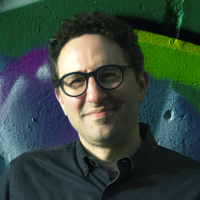
Marc Fuccillo, MD/PhD
University of Pennsylvania
Philadelphia, PA
Marc Fuccillo, MD/PhD
Associate Professor, Department of Neuroscience, University of Pennsylvania
Member, Neuroscience Graduate Group (primary), Cell & Molecular Biology Graduate Group (secondary).
Dr. Fuccillo received his undergraduate degree from Brown University in 1998 and earned his MD and PhD degrees from New York University in 2008. In 2015, he started his own laboratory in the Department of Neuroscience at the University of Pennsylvania, focusing on how cellular diversity and synaptic connectivity of cortico-striato-thalamic circuits supports motor control in normal and disease-modeled states. The lab is particularly interested in how decision processes are altered by circuit dysfunction accompanying autism, OCD, ADHD and TS. Dr. Fuccillo is a recipient of numerous young investigator awards (including TAA) and is a Foundation for OCD principal investigator.

Stephen J. Glatt, Ph.D.
SUNY Upstate Medical University
Syracuse, NY
Dr. Tischfield is an assistant professor in the Department of Cell Biology and Neuroscience at Rutgers University. He received his Ph.D. from the Program in Neuroscience at Harvard Medical School, and completed postdoctoral studies at Johns Hopkins Medical School and Boston Children's Hospital. His research leverages human gene discoveries to genetically engineer mouse models for Tourette syndrome that express the identical human mutations found in high-confidence TS genes. Through partnerships with TAA and also the New Jersey Center for Tourette Syndrome, Dr. Tischfield is a proud advocate for Tourette awareness and research throughout the local and national communities.
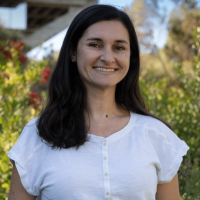
Deanna Greene
University of California, San Diego
San Diego, CA
Dr. Deanna Greene is an Associate Professor of Cognitive Science at the University of California, San Diego. She earned her doctorate in Psychology with an emphasis in Cognitive Neuroscience from the University of California, Los Angeles, followed by postdoctoral training in Psychiatry at Washington University in St. Louis. Dr. Greene’s research focuses on the development of interacting cognitive, motor, and sensory systems and the underlying brain network organization supporting this maturation. She implements a variety of cutting-edge brain imaging and analytic methods to study the typically and atypically developing brain, with particular application to Tourette syndrome. Dr. Greene has won numerous awards and grants for her research on Tourette syndrome, including a NARSAD Young Investigator Award from the Brain & Behavior Research Foundation, a K01 Mentored Research Scientist Career Development Award from the NIMH, and several R-level grants from the NIMH.

Joseph McGuire, Ph.D., M.A.
Johns Hopkins University School of Medicine
Baltimore, MA
Dr. McGuire is an Associate Professor in the Department of Psychiatry and Behavioral Sciences at Johns Hopkins University School of Medicine. His research focuses on investigating the learning processes and mechanisms that underlie the etiology and treatment of OCD, anxiety, and related disorders in children, adolescents, and adults using clinical rating scales, physiological markers, and innovative technologies. His work seeks to improve evidence-based treatments to help patients and families achieve optimal outcomes. Dr. McGuire has received numerous national and international awards. He has co-edited 3 books with Elsevier, published over 140 peer-reviewed journal articles, and has given dozens of conference presentations. Dr. McGuire’s research has been supported by the National Institute Health, Tourette Association of America, Hilda and Preston Davis Foundation, Misophonia Research Fund, and the American Academy of Neurology.
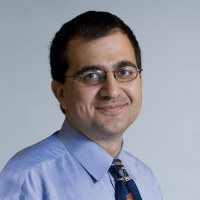
Jeremiah Scharf, M.D., Ph.D.,
Massachusetts General Hospital
Boston, MA
Dr. Jeremiah Scharf is a behavioral neurologist and neuropsychiatric geneticist who works as the interface between neurology and psychiatry, employing genetics and clinical research tools to investigate the etiology and pathogenesis of Tourette Syndrome and related disorders as model neuropsychiatric illnesses. His research lab is focused on genetic and non-genetic factors that predispose individuals to TS and its common comorbidities, specifically obsessive-compulsive disorder and attention-deficit hyperactivity disorder. Dr. Scharf is the co-chair of the Tourette Association International Consortium for Genetics Steering (Tourette AssociationICG) Committee and principal investigator of the Tourette AssociationICG multicenter U01 grant from the NINDS. Dr. Scharf is also Director of the Partners Neurology Tic Disorders Clinic at Massachusetts General Hospital, which currently sees over 75 new cases a year and provides comprehensive clinical assessments and ongoing management of TS patients referred from local, regional, national and international sources.
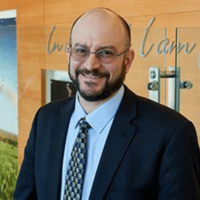
Bradley L. Schlaggar, M.D., Ph.D.
Kennedy Krieger Institute
Baltimore, MD
Dr. Bradley L. Schlaggar (Honors ScB Brown University 1986; MD/PhD Washington University 1994) is the President and CEO of Kennedy Krieger Institute in Baltimore, MD, where he also holds the Zanvyl Krieger Faculty Endowed Chair and is a Professor of Neurology and of Pediatrics at Johns Hopkins University School of Medicine. Prior to moving to Baltimore in August 2018, Dr Schlaggar was the A. Ernest and Jane G. Stein Professor of Developmental Neurology, in Neurology, and Professor of Neurology, Radiology, Neuroscience, Psychiatry, and Pediatrics, at Washington University in St. Louis School of Medicine. In 1999, he completed his pediatric neurology residency training at St. Louis Children’s Hospital and Washington University. From 2014-2018, he served as the Head of Pediatric & Developmental Neurology, co-Director of the Intellectual & Developmental Disabilities Research Center, and Neurologist-in-Chief at St. Louis Children’s Hospital. He served as the Pediatric Neurology Residency Director from 2005-2013. He has received numerous awards for research, mentorship, clinical care, and community service, including the Philip R Dodge Young Investigator Award from the Child Neurology Society, the Norman Geschwind Award for Behavioral Neurology from the American Academy of Neurology, the E. Mead Johnson Award from the Society for Pediatric Research, and the Frank Hatch Award for Outstanding Community Service from the John Merck Foundation. Dr. Schlaggar’s research efforts, funded primarily by the NIH, have been directed at understanding the development of the brain’s functional network architecture in typically and atypically developing children. Dr. Schlaggar’s clinical expertise is in pediatric movement disorders, including Tourette syndrome, as well as developmental disorders of language and cognition.
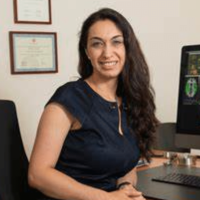
Kristina Simonyan, M.D., Ph.D.
TiHo University of Hannover, Germany
Kristina Simonyan received her medical degrees (M.D. and Dr. med.) from Yerevan State Medical University in Armenia and Georg-August University in Goettingen, Germany, as well as a PhD degree in Neurobiology from TiHo University of Hannover, Germany. She completed her medical residency in otolaryngology and clinical research fellowship in movement disorders, neurolaryngology and neuroimaging. Dr. Simonyan studies the neural mechanisms of normal and diseased speech production and other complex voluntary motor behaviors. Her clinical research program is focused on focal dystonia, a debilitating neurological movement disorder causing involuntary muscle spasms in different body regions. Her methodological approach bridges brain imaging, computational neuroscience, genetics and clinical trials for identification of objective diagnosis, prediction of risk, and treatment of dystonia. Her recent studies have mapped the large-scale neural architecture underlying speech production and its impairments in focal dystonias. This work has led to identification of potential neural markers of laryngeal dystonia (or spasmodic dysphonia) as well as the assessment of new therapeutic options for the treatment of this disorder. Her research is currently supported by the National Institutes of Health (NIDCD and NINDS), Jazz Pharmaceuticals, and Amazon Web Services.

Max Tischfield, Ph.D.
Rutgers University
Piscataway, NJ
Dr. Tischfield is an assistant professor in the Department of Cell Biology and Neuroscience at Rutgers University. He received his Ph.D. from the Program in Neuroscience at Harvard Medical School, and completed postdoctoral studies at Johns Hopkins Medical School and Boston Children's Hospital. His research leverages human gene discoveries to genetically engineer mouse models for Tourette syndrome that express the identical human mutations found in high-confidence TS genes. Through partnerships with TAA and also the New Jersey Center for Tourette Syndrome, Dr. Tischfield is a proud advocate for Tourette awareness and research throughout the local and national communities.
